Useful information about the taxon (species, subspecies, variety...)
Fagus sylvatica L. 1753
Fagaceae
(APG IV)European beech
Taxon concept: World Flora Online
Distribution: Europe, Turkey
Fagus sylvatica L. - : Fagus sylvatica L. bei Zander 2008; Familie: Fagaceae (Zander 2008)Fagus sylvatica L. - Accepted: Fagus sylvatica L. bei The Plant List (2010); Familie: Fagaceae (APG III)Fagus sylvatica L. - Accepted: Fagus sylvatica L. bei The Plant List (2014), version 1.1; Familie: Fagaceae (APG III)Fagus sylvatica L. - Accepted: Fagus sylvatica L. bei The Plant List (2014), version 1.1; Familie: Fagaceae (APG IV)Fagus sylvatica L. - Accepted: Fagus sylvatica L. bei The Plant List (2010); Familie: Fagaceae (APG IV)Fagus sylvatica L. - Accepted: Fagus sylvatica L. bei Schmeil-Fitschen 2019; Familie: Fagaceae (APG IV)Fagus sylvatica L. - Accepted: Fagus sylvatica L. bei BfN Checklist Flora DE; Familie: Fagaceae (APG IV)Fagus sylvatica L. - Accepted: Fagus sylvatica L. bei World Flora Online - APG IV (Angiosperms); Familie: Fagaceae (World Flora Online - APG IV (Angiosperms))
- Flowers
- monoecious flowers; male flowers in long-stalked, drooping, globular catkins and female flowers in erect inflorescences
- Flower ecology
- wind-pollinated (anemophilous)
- Life form
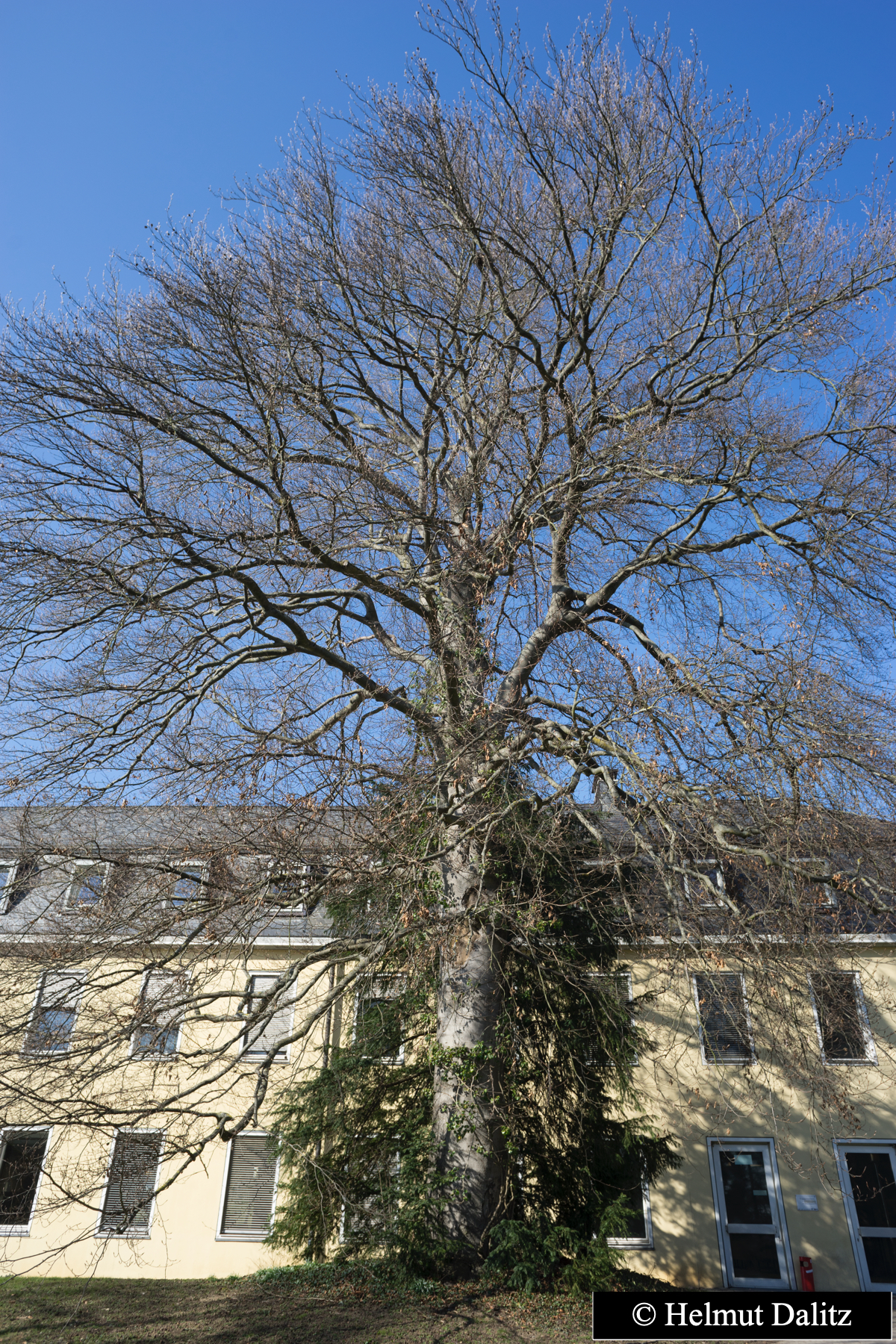
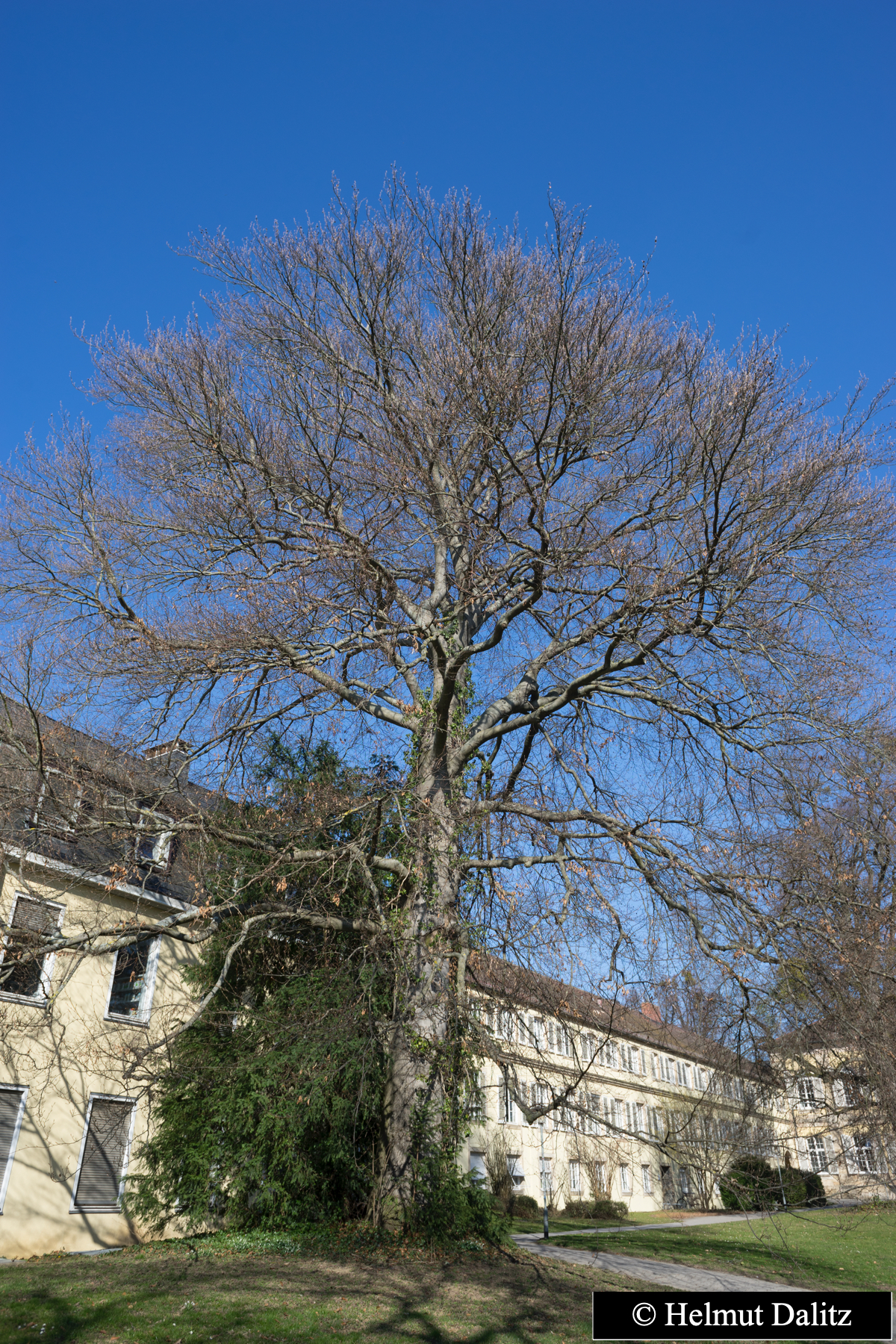
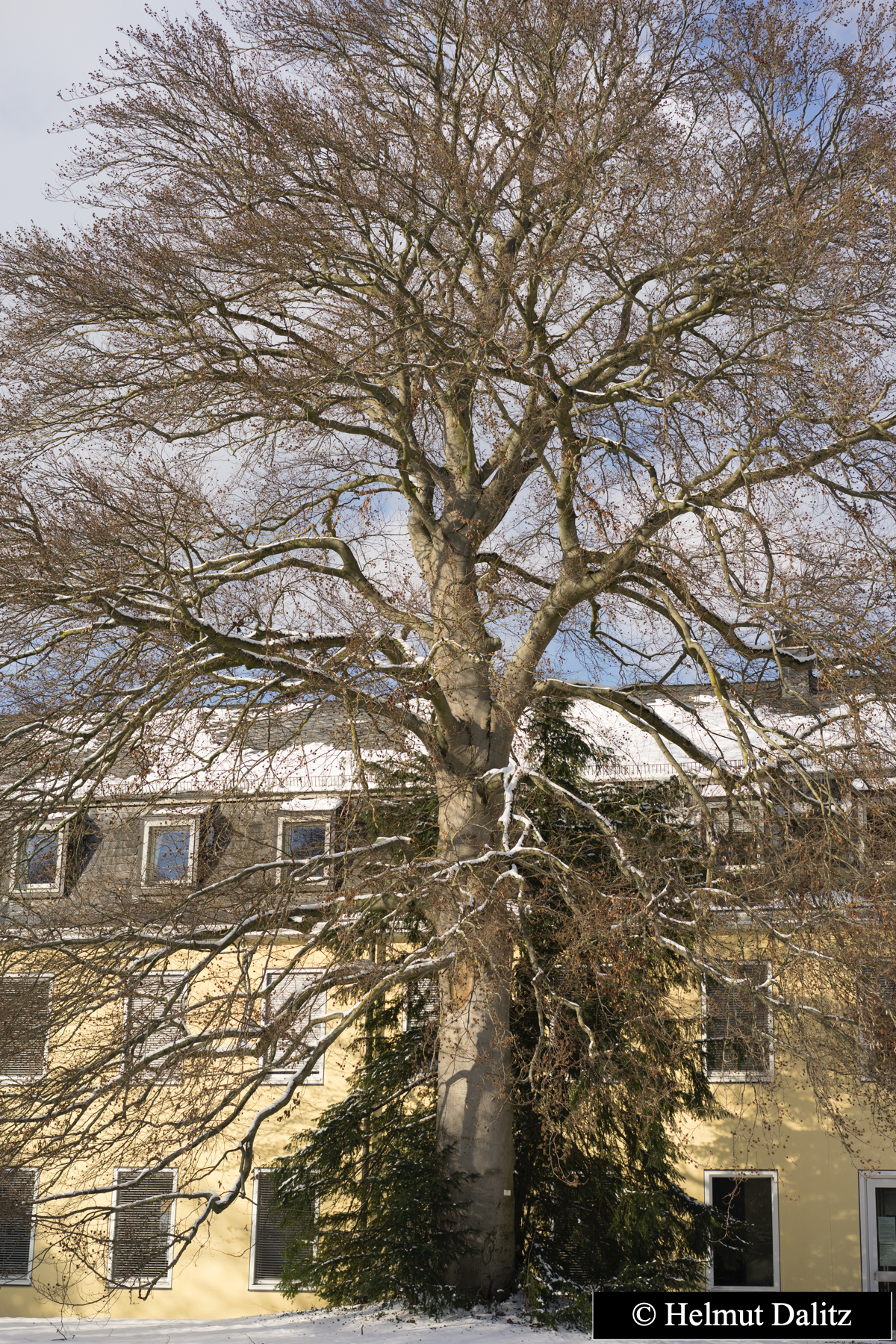
- woody, tree
- Leaves
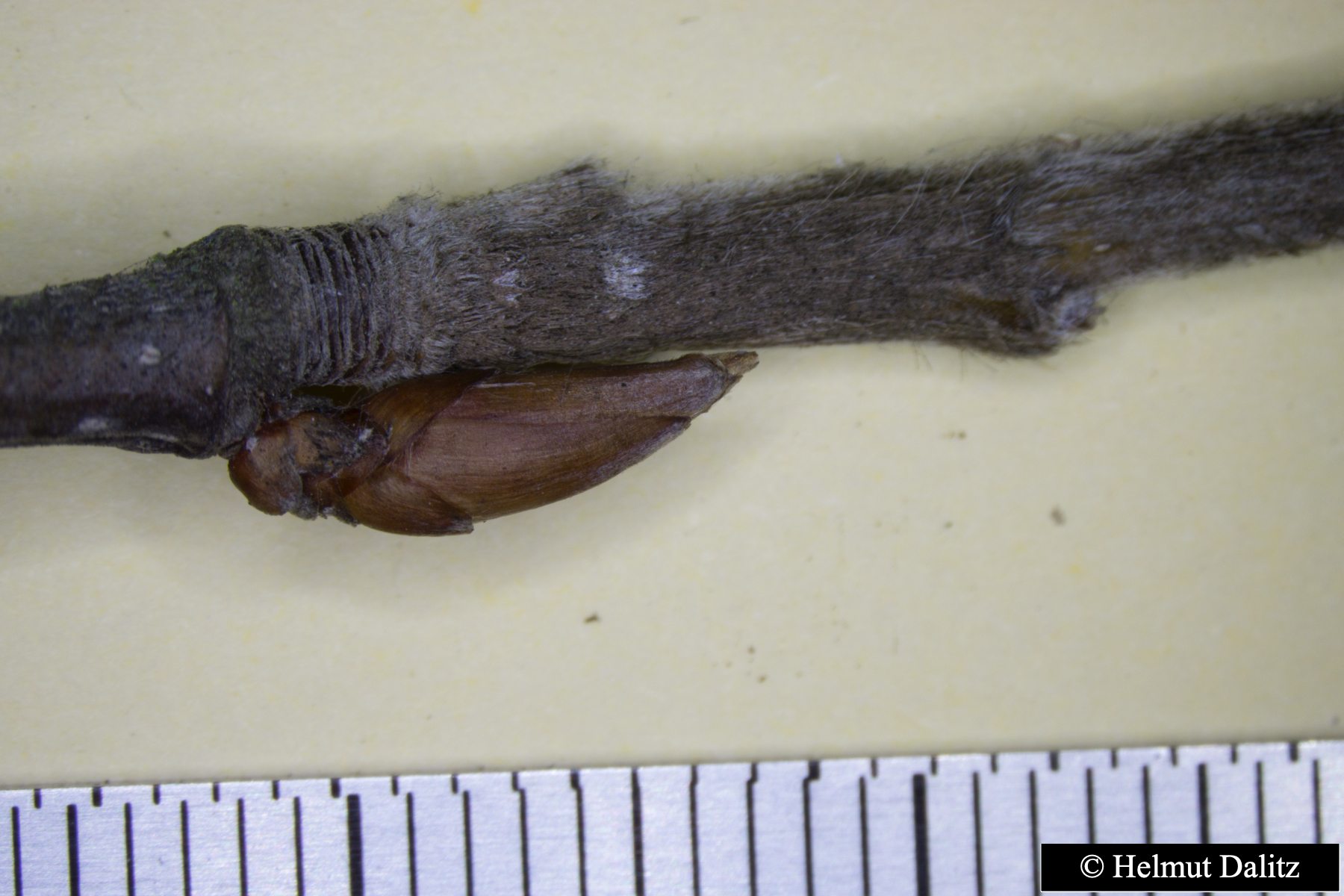
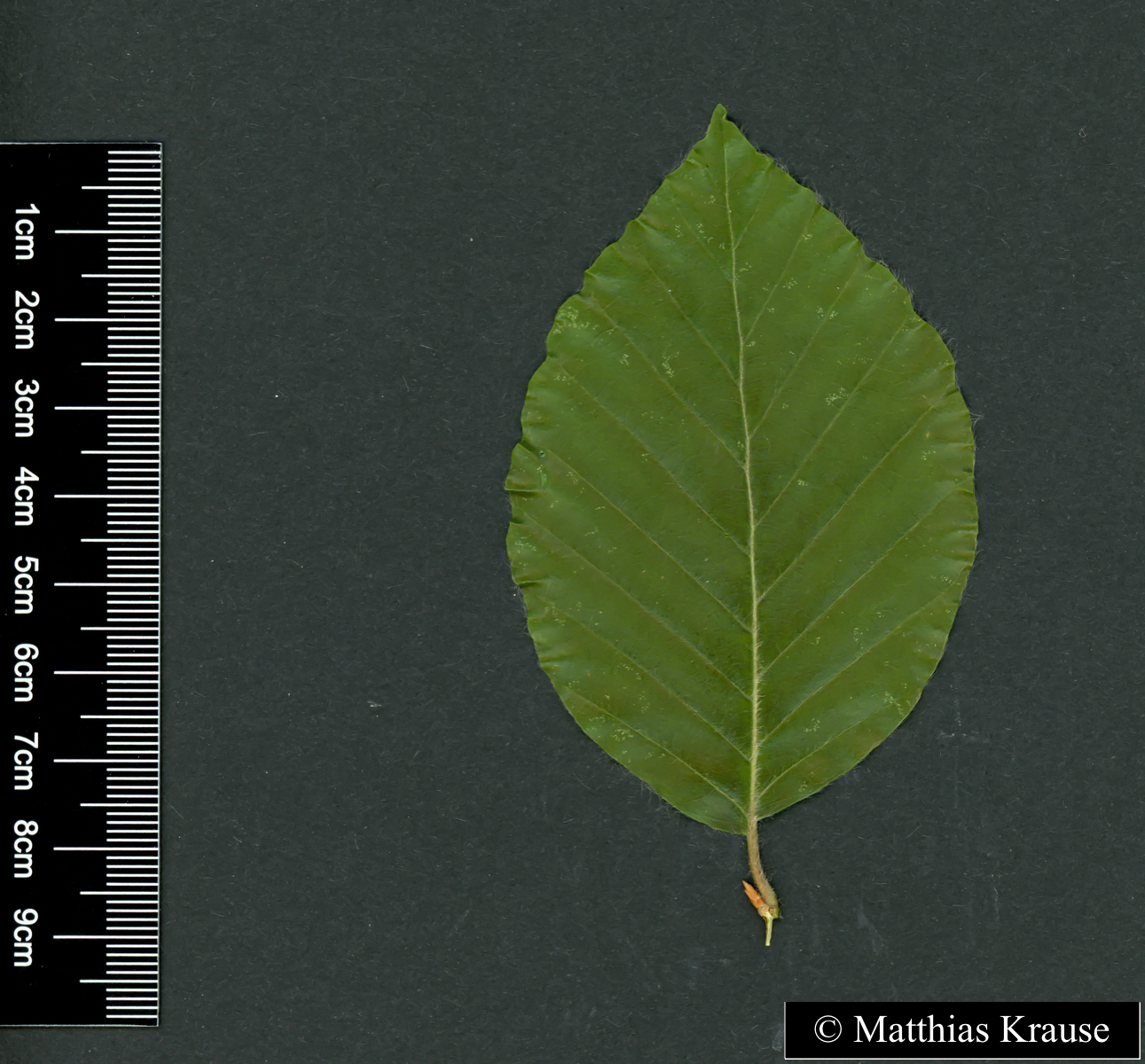
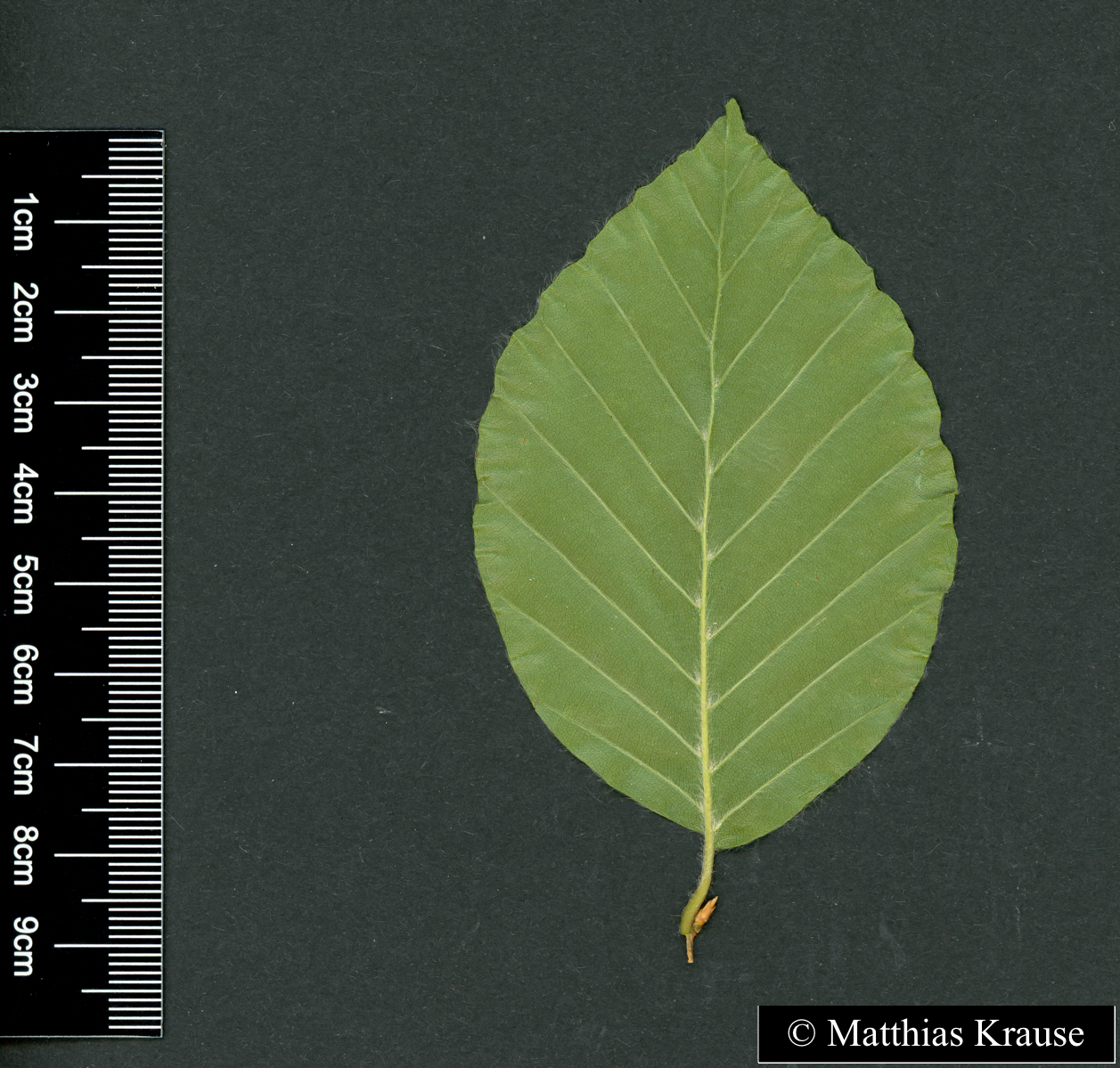
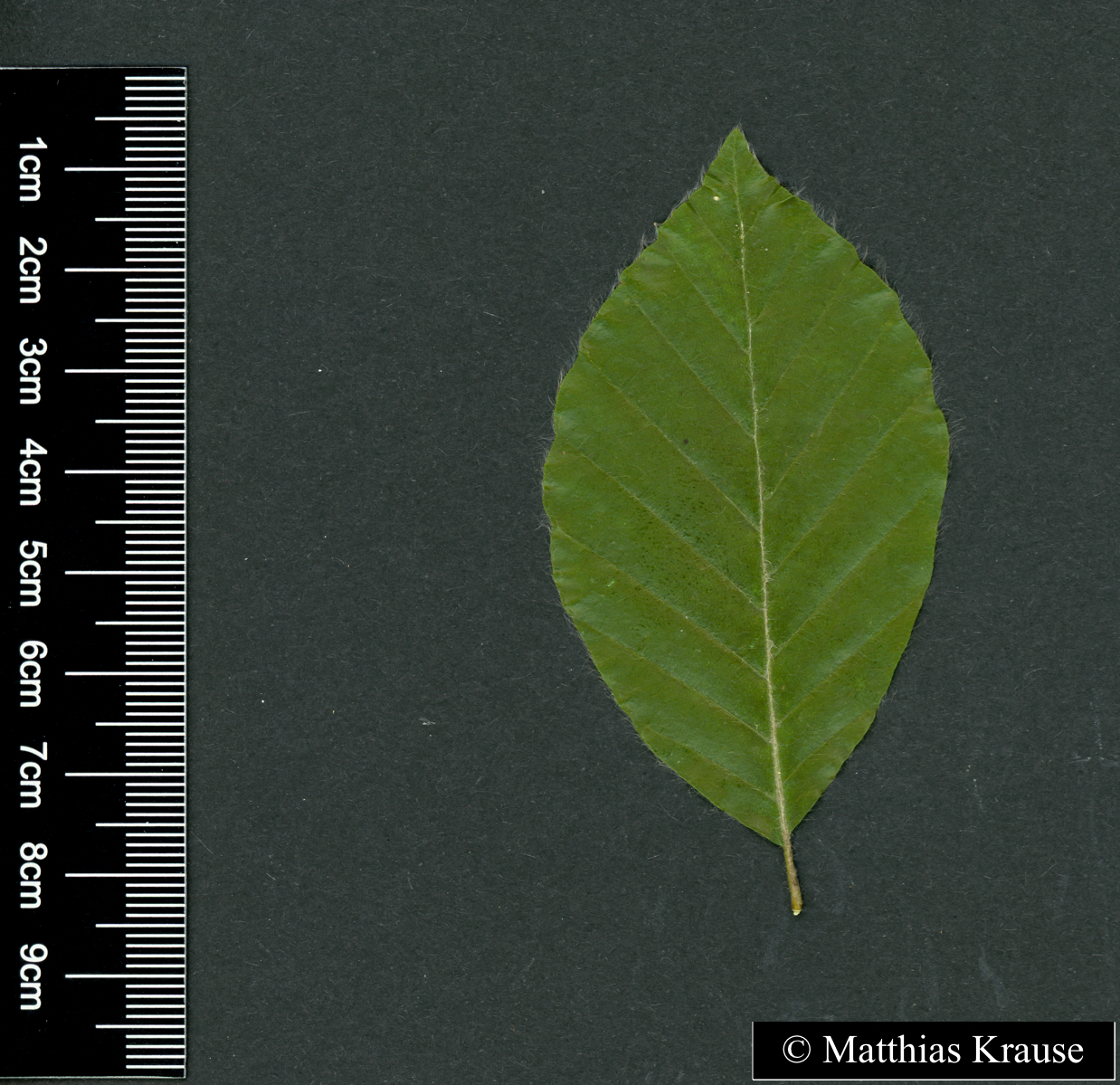
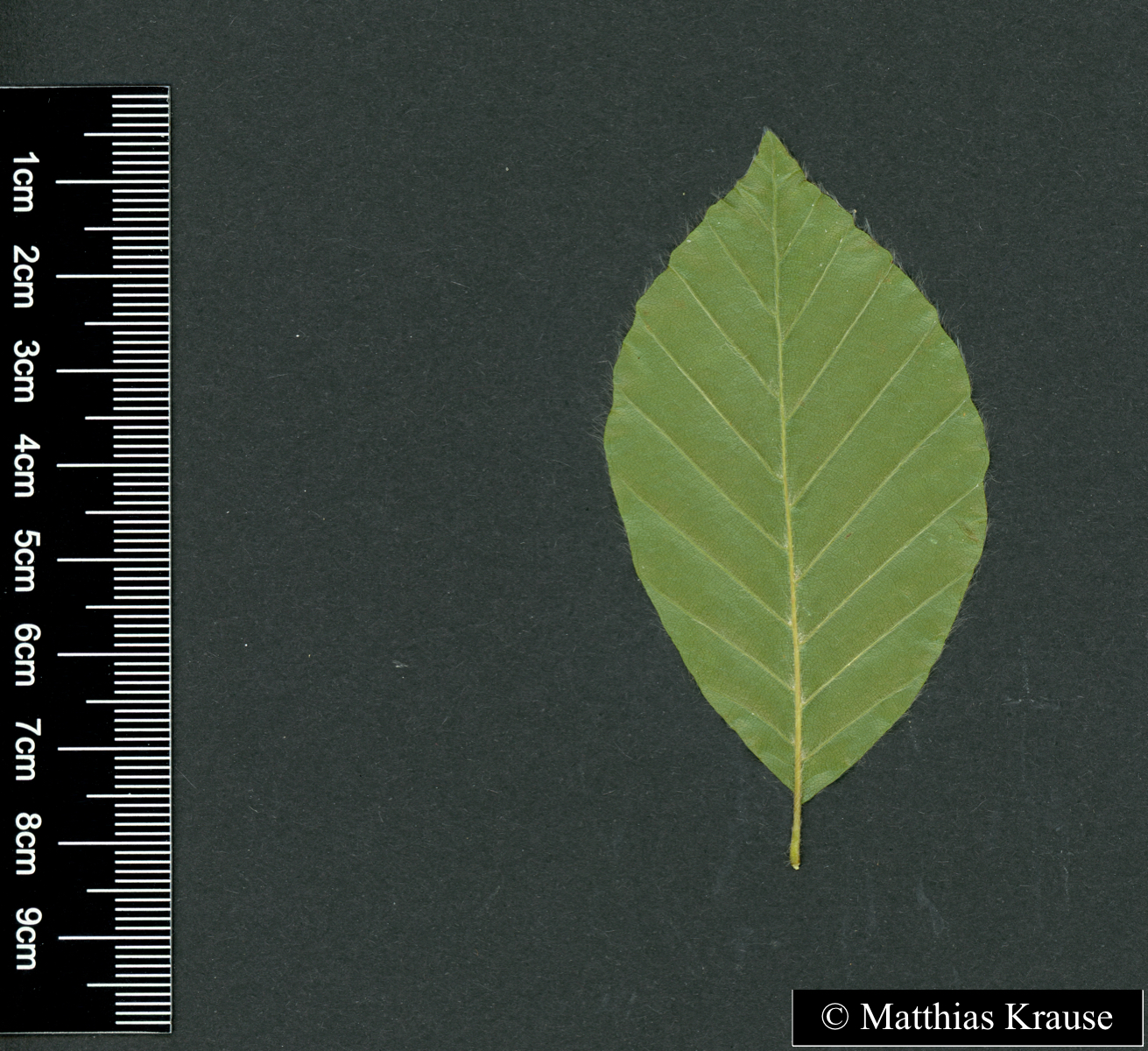
- ciliate
- Foliage persistence
- deciduous
- Fruits
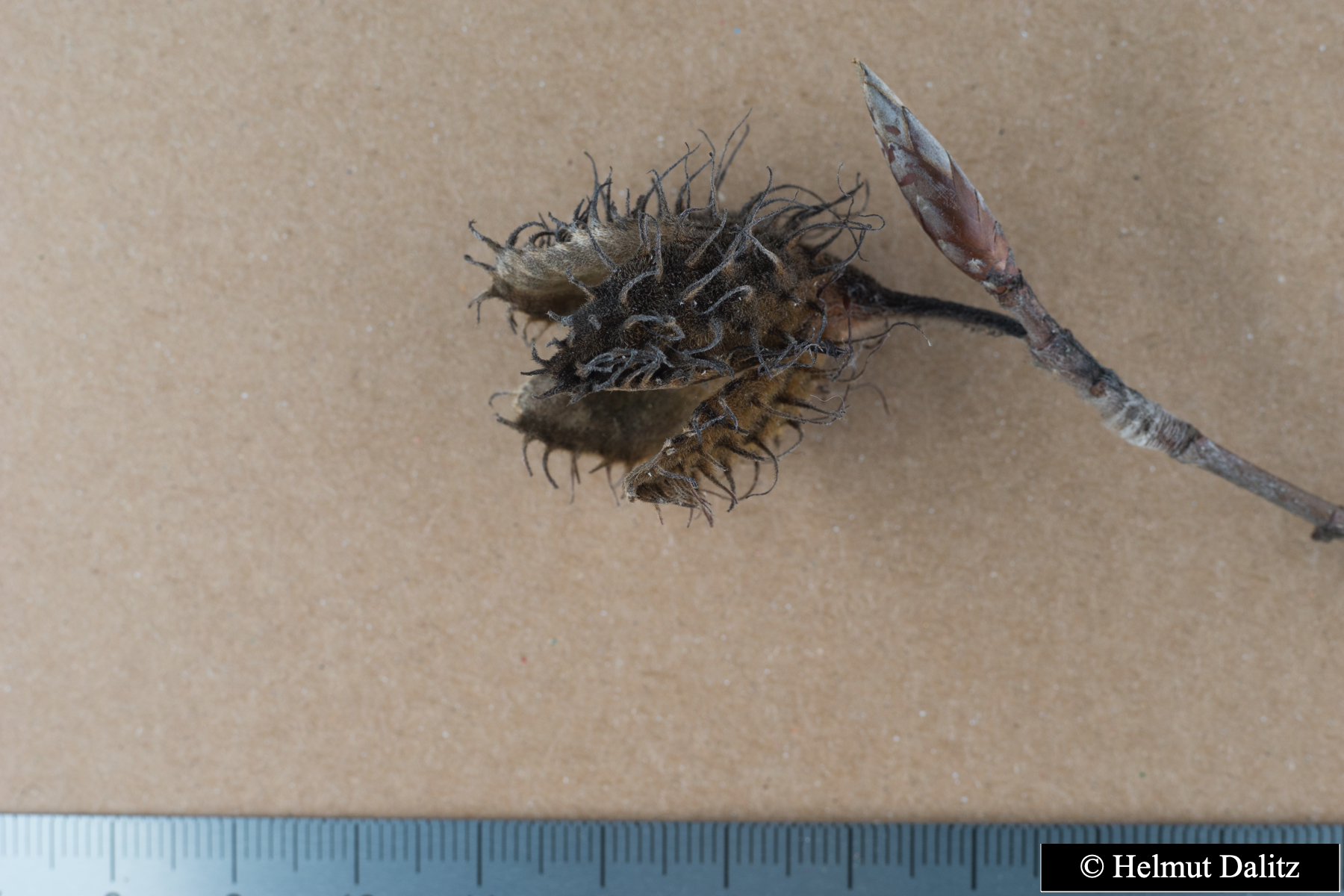
- fruit is a triangular nut (beechnut) with two nuts being enveloped in a spiny cupule
- Fruit ecology
- barochorous and zoochorous (squirrels, rodents, birds)
- Soil conditions
- preferentially on fresh, percolating, well-drained, sandy-stony, loamy soils of medium depth
- Light conditions
- shade tree
- Root type
- deep-rooting plant (heart-shaped root system)
- Natural occurrence (habitat)
- mesophile mixed deciduous forests, beech forests on limestone, pollarded woods; in summer moist climate sides
- Vegetation typ and synecology (plant community)
- temperate, mesophytic broad-leaved deciduous and mixed forests; mainly in the Fagion, but also in Quercion rob., Querco-Fagetea-species
- Constraints according soil conditions
- not salt tolerant; not tolerant to waterlogged or compacted soil
- Usage
- as firewood or charcoal; wear resistant wood used for furniture, parquet floors, musical instruments, etc.; beech nuts as food for pigs
- Bark
- smooth, silver-grey bark
Erhardt, W., Götz, E., Bödeker, N. & Seybold, S. (2008): Der große Zander. Enzyklopädie der Pflanzennamen. Band 2. Arten und Sorten. Eugen Ulmer KG, Stuttgart (Hohenheim), 18. Aufl., 2103 S.; Haider, M. et al. (2005): Wildbienenkataster. See: https://www.wildbienen-kataster.de; Maurizio, Anna et al. (1982): Nektar und Pollen - die wichtigsten Nahrungsquellen der Honigbiene. 4. Ehrenwirth, München, 3, überabeitete Auflage; Oberdorfer, E. (2001): Pflanzensoziologische Exkursionsflora. Für Deutschland und angrenzende Gebiete. Eugen Ulmer Verlag, Stuttgart, 8., stark überarb. u. erg. Aufl, 1056 S. 978-3-8001-3131-0.; Pritsch, Günter et al. (1985): Bienenweide.. Neumann-Neudamm, Melsungen; Ruppertshofen, Heinz et al. (1995): Der summende Wald - Waldimkerei und Waldhygiene.. Ehrenwirth, München, 8., völlig neubearb. und erw. Aufl.; Schick, B. & Spürgin, A. (1997): Die Bienenweide. Eugen Ulmer Verlag, Stuttgart, Auflage: 4., völlig neubearb. u. erw. A., 216 S. 978-3800174188.; The International Plant Names Index (2009). Published on the Internet http://www.ipni.org; Courtesy to IPNI, 2009. Exported from IPNI at date: 2009-09-22 20:17:51; Werle, Susanne et al. (2015): ITS2 DNA metabarcoding of wild bee pollen loads, collected in 2020 and 2021 across all three exploratories. See: https://www.bexis.uni-jena.de/ddm/data/Showdata/31545?version=6; Westrich, P. et al. (2018): Die Wildbienen Deutschlands.. Ulmer Verlag ISBN 978-8186-0123-2.;