Useful information about the taxon (species, subspecies, variety...)
Populus alba L. 1753
Salicaceae
(APG IV)silver-leaf poplar, white poplar
Taxon concept: World Flora Online
Distribution: central and southern Europe, Turkey, Palestine, Caucasus, western Siberia, Central Asia, North Africa; naturalised on the British Isles, in Scandinavia, Denmark, North America, New Zealand and South Africa
Populus alba L. - Accepted: Populus alba L. bei Zander 2008; Familie: Salicaceae (Zander 2008)Populus alba L. - Accepted: Populus alba L. bei The Plant List (2010); Familie: Salicaceae (APG III)Populus alba L. - Accepted: Populus alba L. bei The Plant List (2014), version 1.1; Familie: Salicaceae (APG III)Populus alba var. pyramidalis Bunge - Accepted: Populus alba var. pyramidalis Bunge bei The Plant List (2014), version 1.1; Familie: Salicaceae (APG III)Populus alba var. pyramidalis Bunge - Synonym: Populus alba L. bei Zander 2008; Familie: Salicaceae (Zander 2008)Populus alba var. pyramidalis Bunge - Synonym: Populus alba L. 'Pyramidalis' bei Zander 2008; Familie: Salicaceae (Zander 2008)Populus alba L. 'Pyramidalis' - Accepted: Populus alba L. 'Pyramidalis' bei Zander 2008; Familie: Salicaceae (Zander 2008)Populus alba L. - Accepted: Populus alba L. bei The Plant List (2014), version 1.1; Familie: Salicaceae (APG IV)Populus alba var. pyramidalis Bunge - Accepted: Populus alba var. pyramidalis Bunge bei The Plant List (2014), version 1.1; Familie: Salicaceae (APG IV)Populus alba L. - Accepted: Populus alba L. bei The Plant List (2010); Familie: Salicaceae (APG IV)Populus alba L. 'Pyramidalis' - Accepted: Populus alba L. 'Pyramidalis' bei Zander 2008; Familie: Salicaceae (APG IV)Populus alba L. - Accepted: Populus alba L. bei BfN Checklist Flora DE; Familie: Salicaceae (APG IV)Populus alba L. - Accepted: Populus alba L. bei World Flora Online - APG IV (Angiosperms); Familie: Salicaceae (World Flora Online - APG IV (Angiosperms))
- Difference to related species
- compared to Populus nigra on drier sites
- Flowers
- dioecious species; male and female flowers in catkins
- Flower ecology
- wind-pollinated (anemophilous)
- Life form
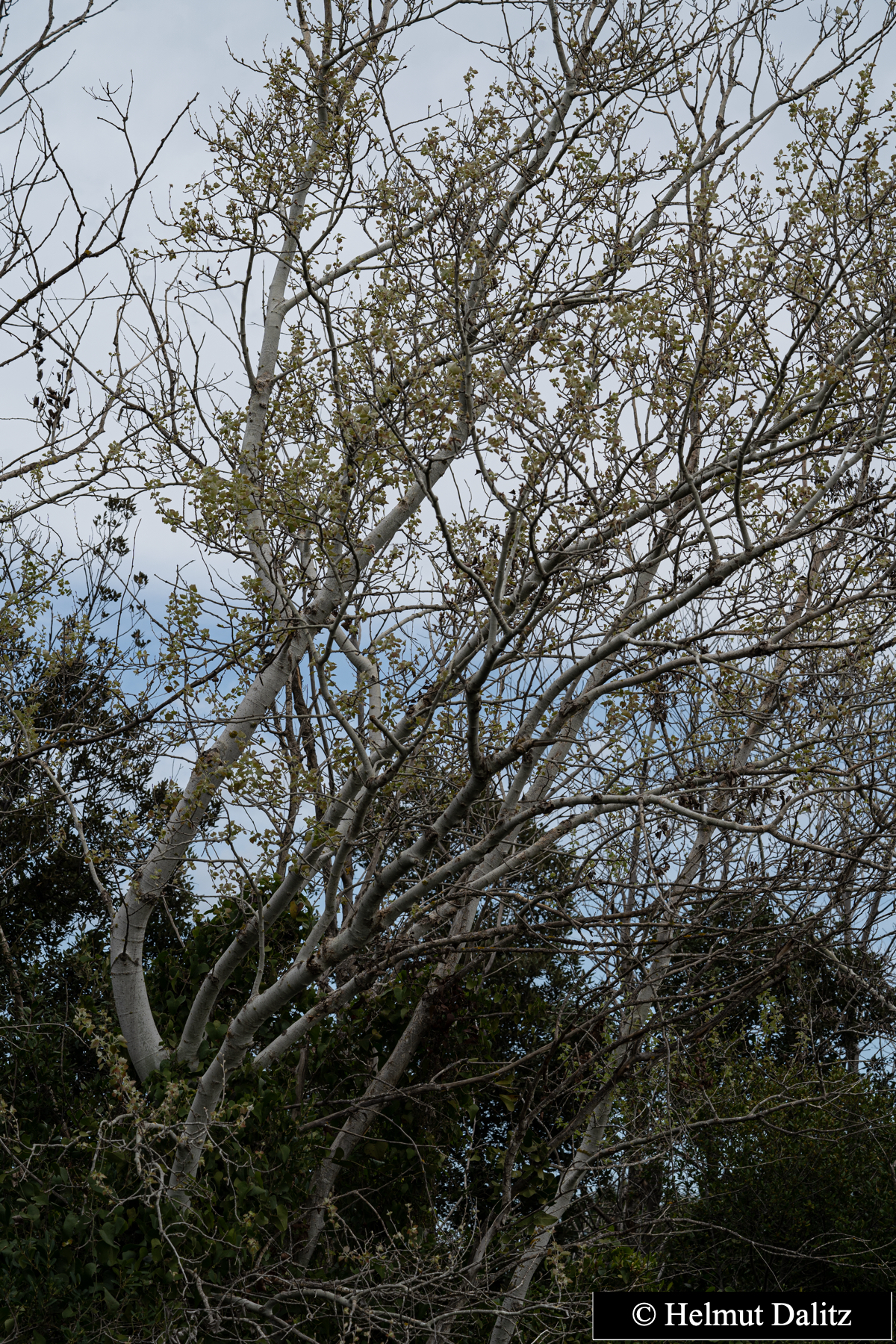
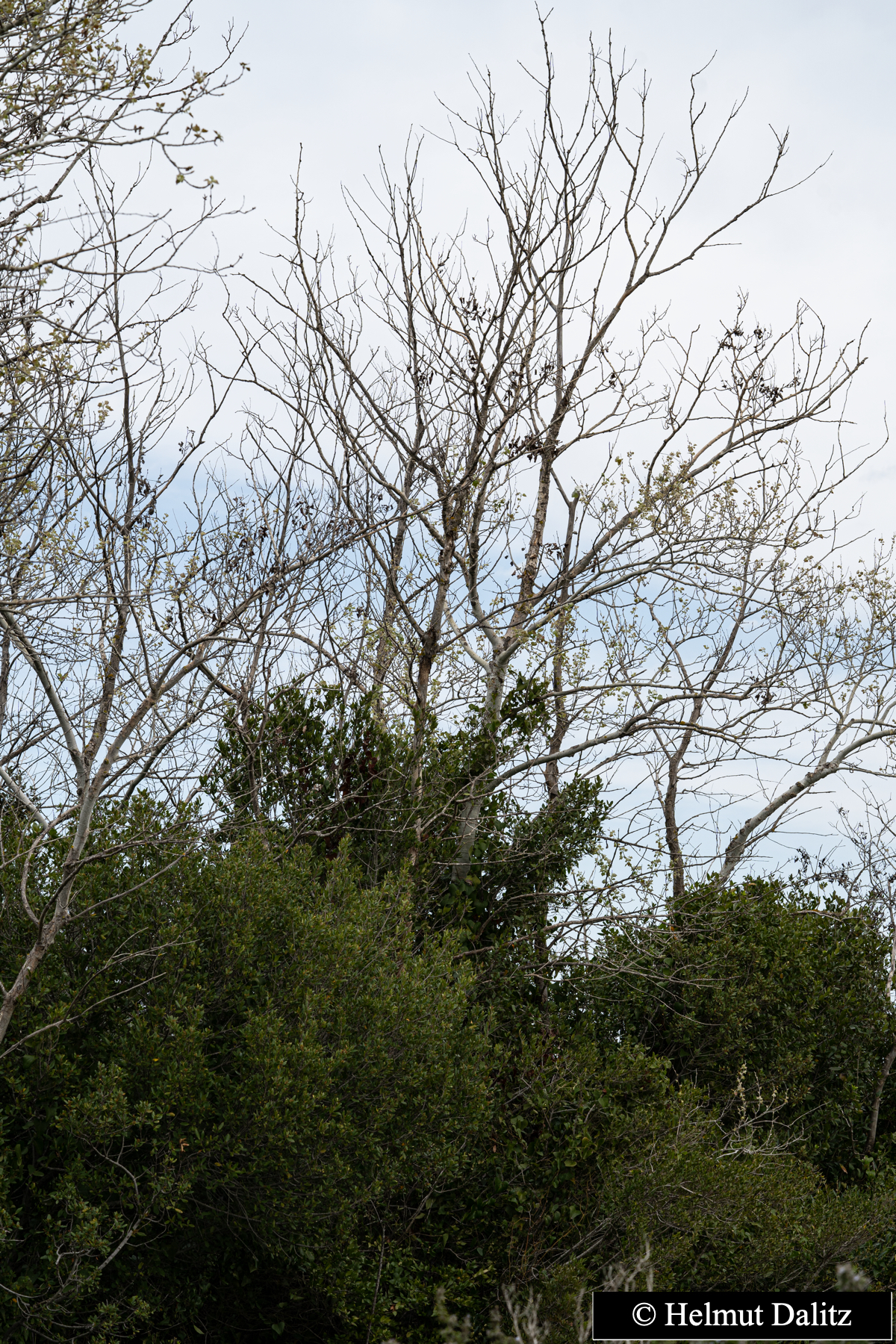
- woody, tree
- Leaves
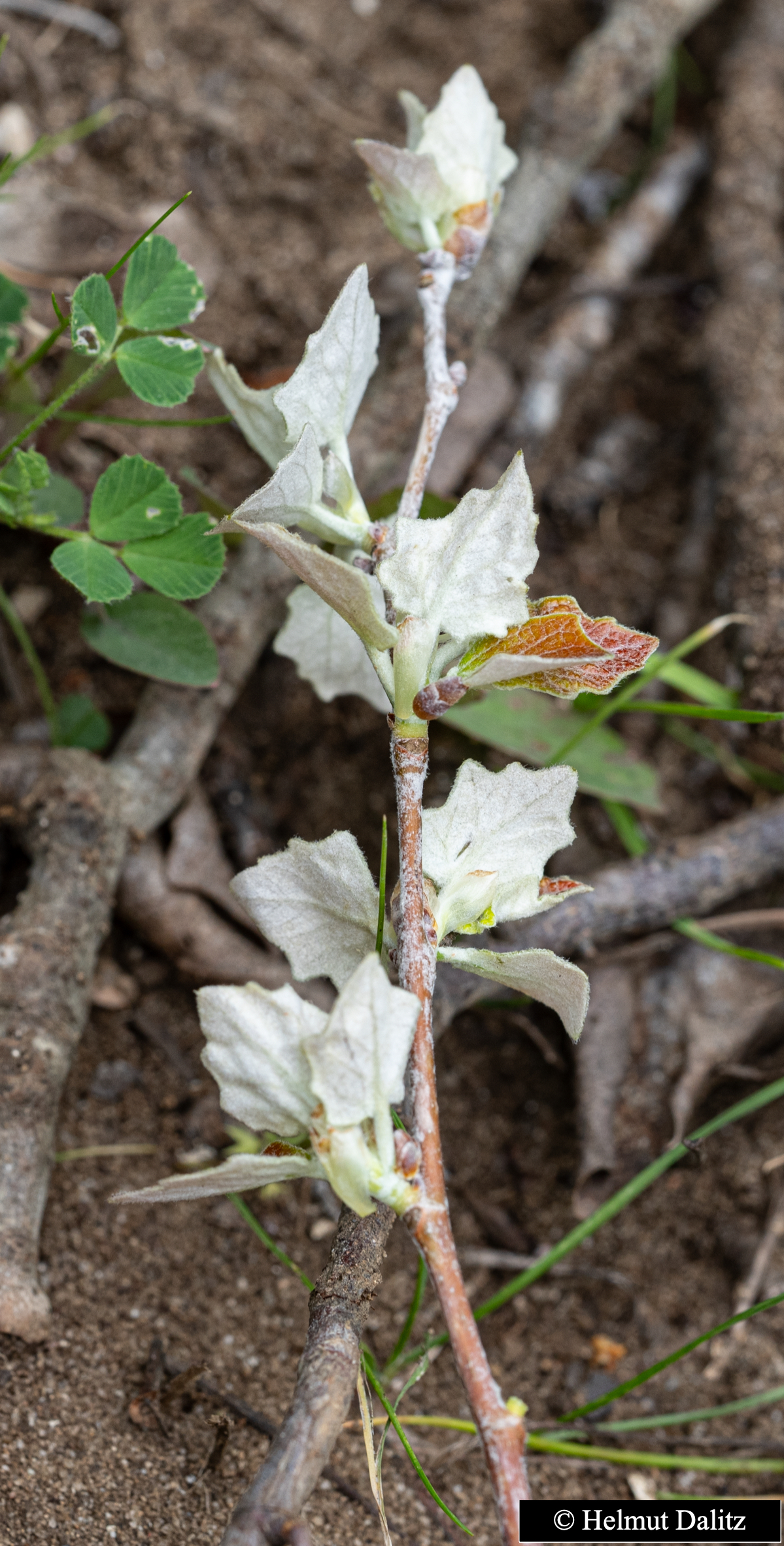
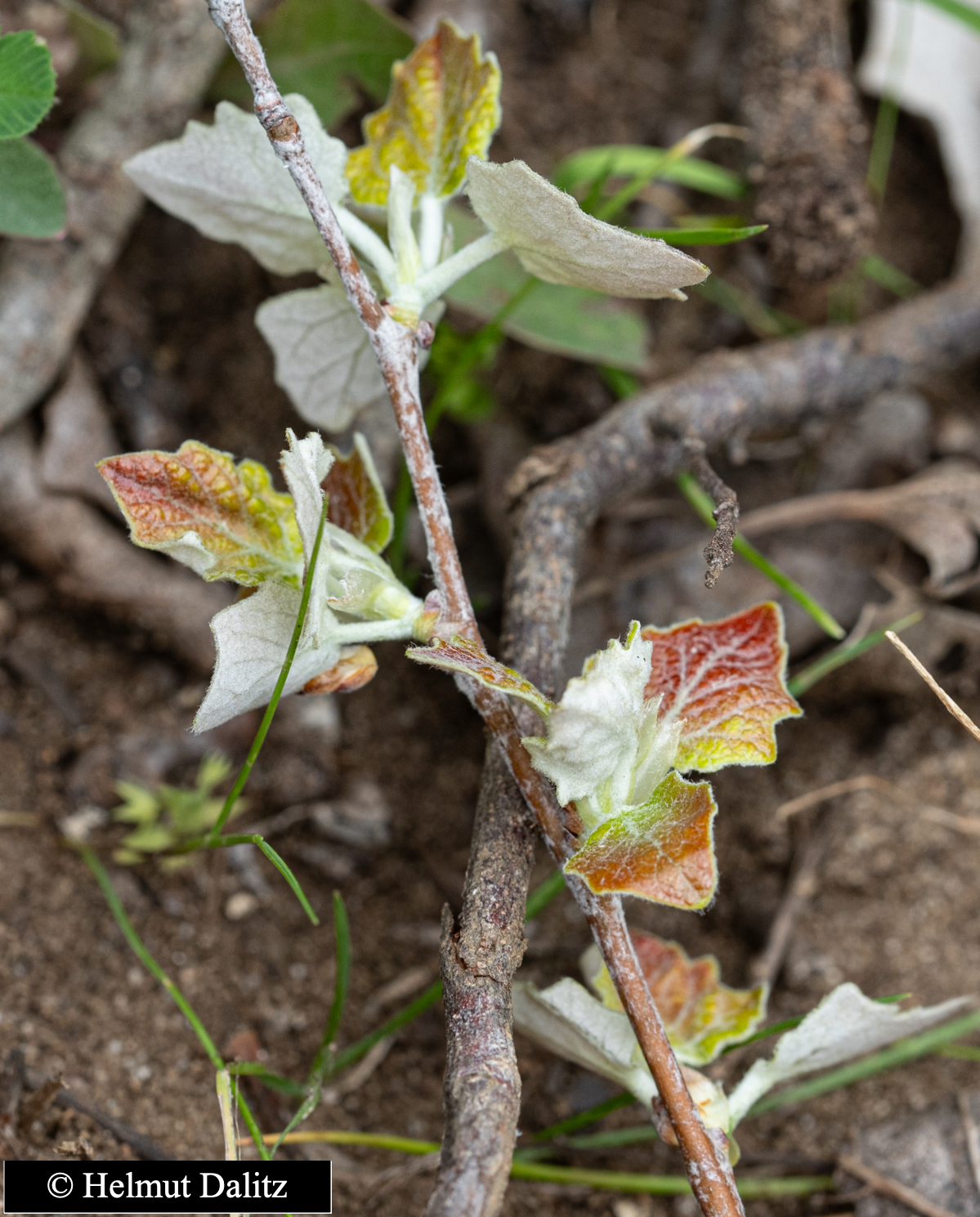
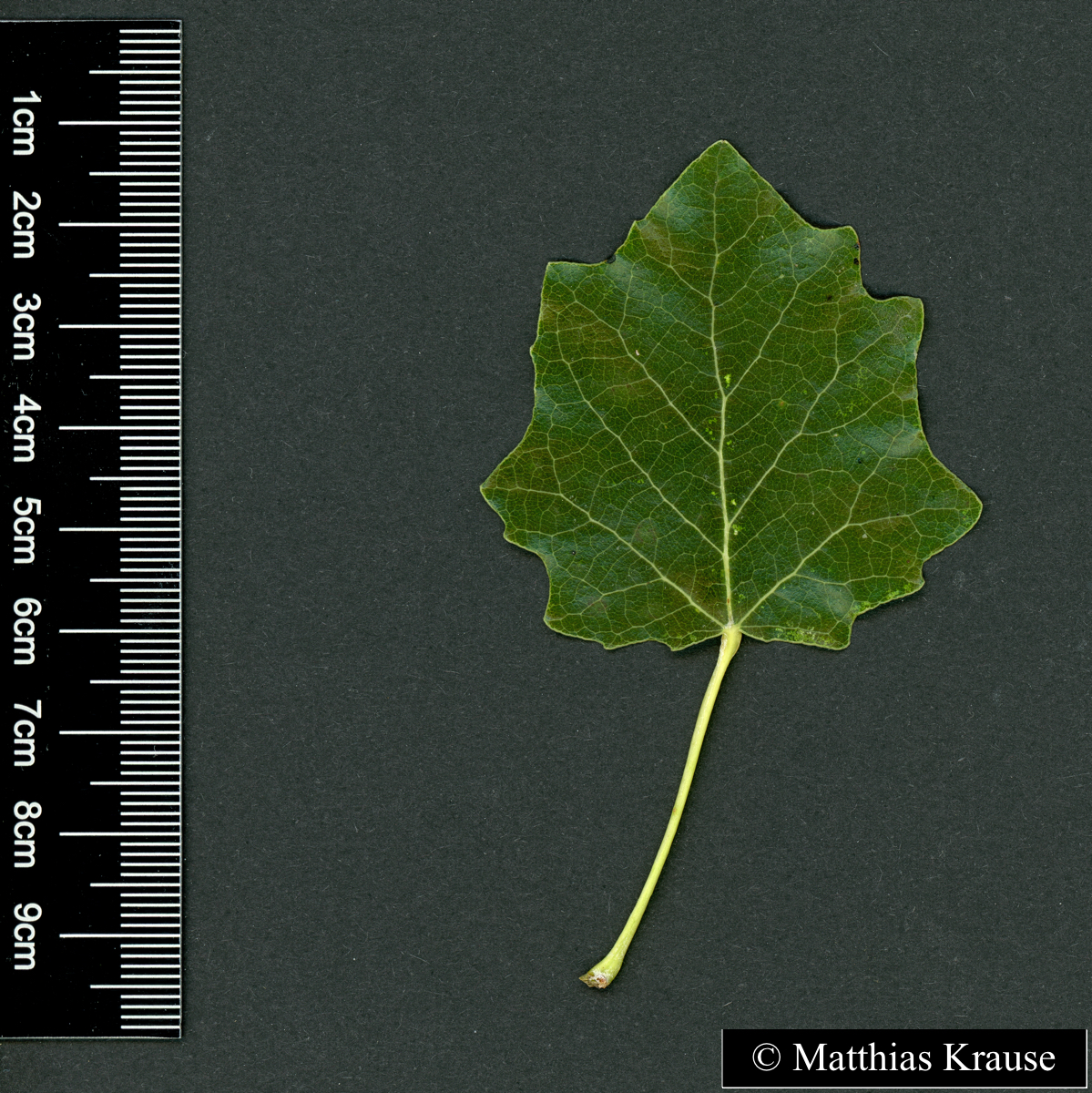
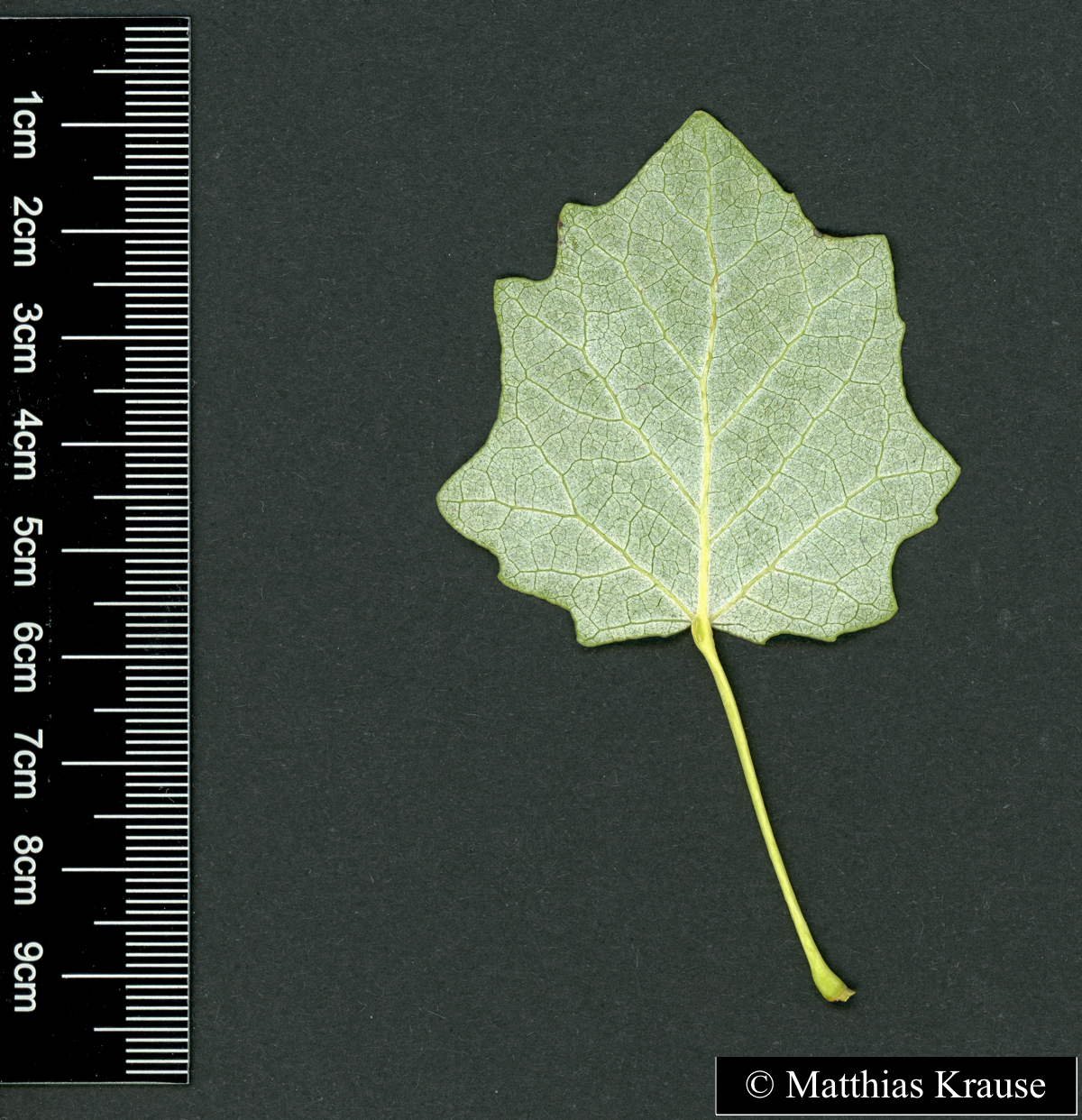
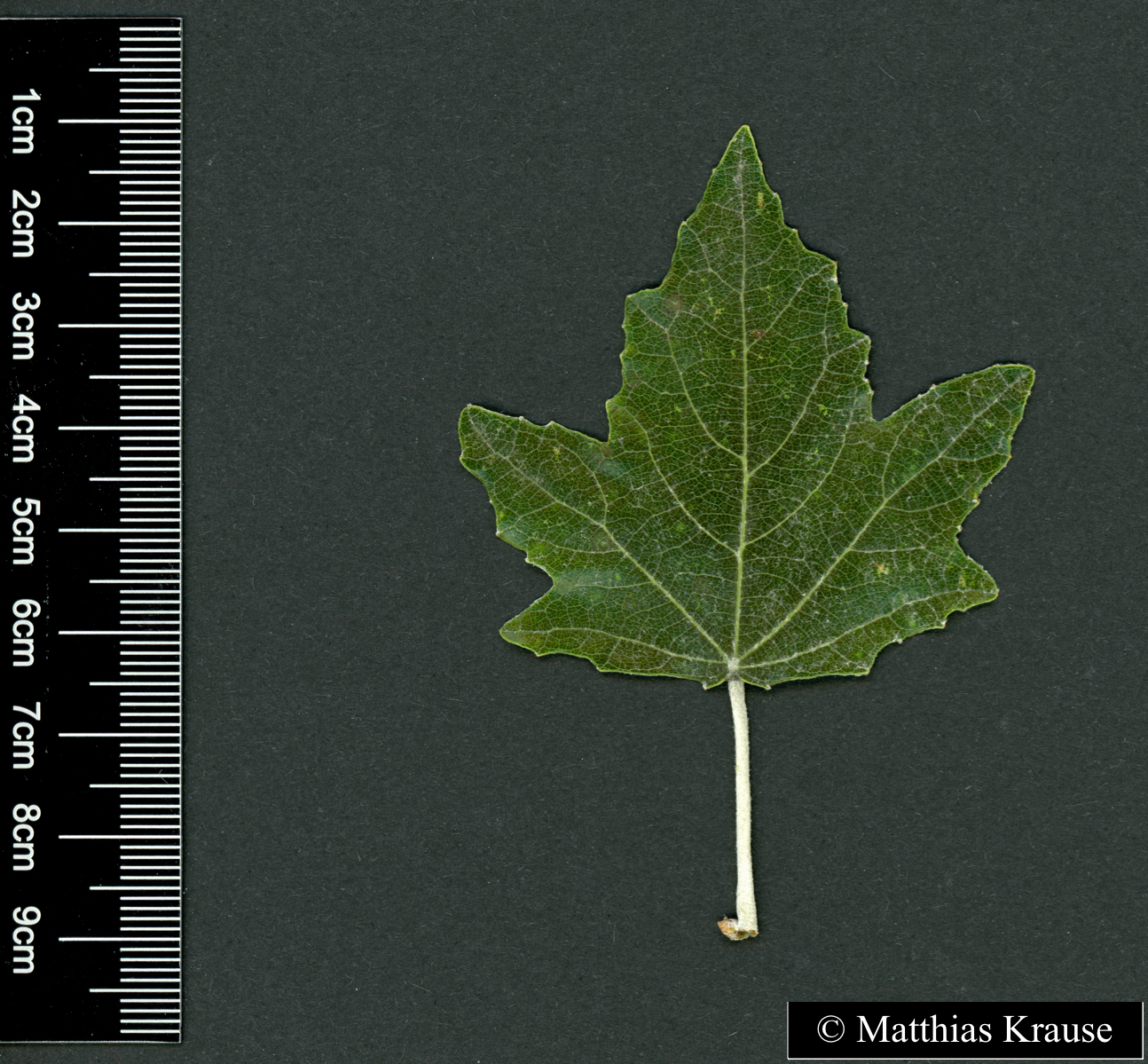
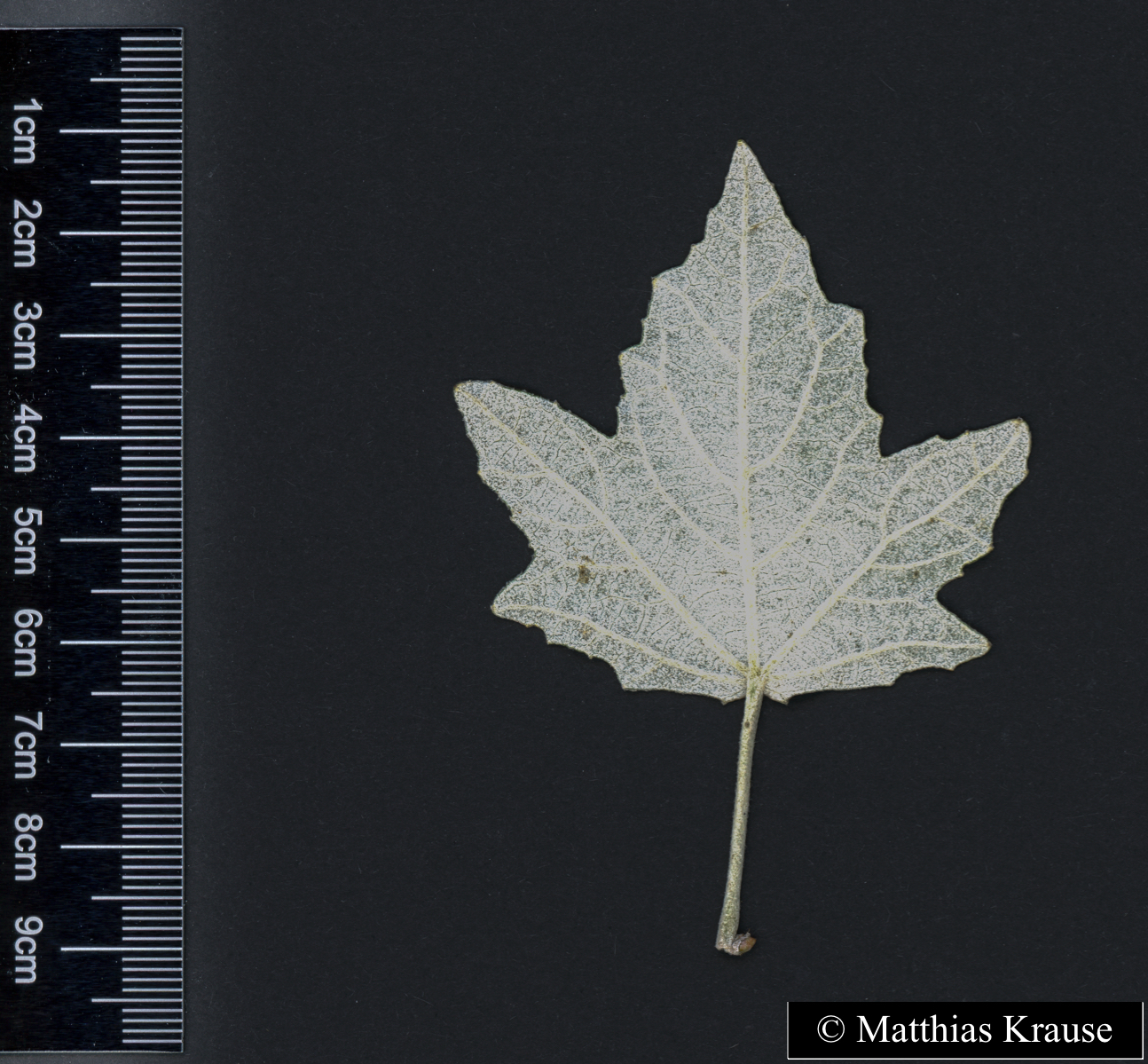
- morphologically variable leaves; silvery-white lower leaf side
- Foliage persistence
- deciduous
- Fruits
- capsule fruit with fluffy seeds
- Fruit ecology
- wind-dispersed (anemochorous)
- Soil conditions
- preferentially on at least ground and temporarily perculating moist, nutrient-rich and alkaline, immature or humus-containing, loose clay and loamy soils
- Natural occurrence (habitat)
- floodplain mixed forests and riparian woodlands, floodplain clearings, screes, constantly flowing Mediterranean rivers, sand dunes; in Germany native in the Upper Rhine Lowland and in floodplains of the Danube; otherwise planted
- Vegetation typ and synecology (plant community)
- temperate to warm-temperate/Mediterranean, mixed mesophytic broad-leaved forests; in associations of the Alno-Ulmion and Paspalo-Agrostidion
- Constraints according soil conditions
- tolerant to drought, wind and high temperatures
- Life span
- long-lived species (to 400 years old)
- Usage
- used as an ornamental tree, as a windbreak and for dune stabilisation; is exploited for phytoremediation (i.e. for environmental decontamination by means of plants); the wood is used for paper production, excelsior, crates, e.g. fruit boxes, and fibre boards
- Bark
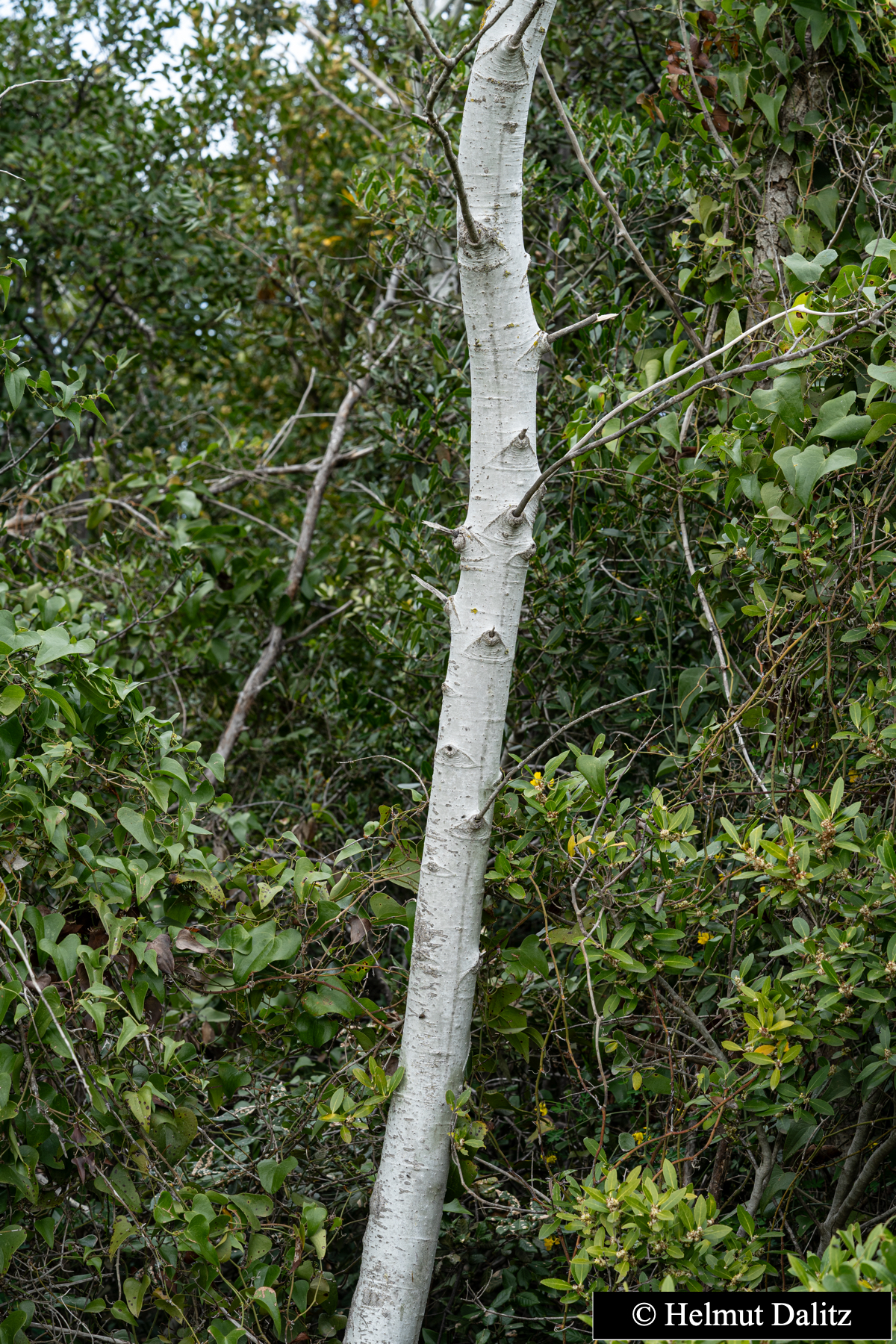
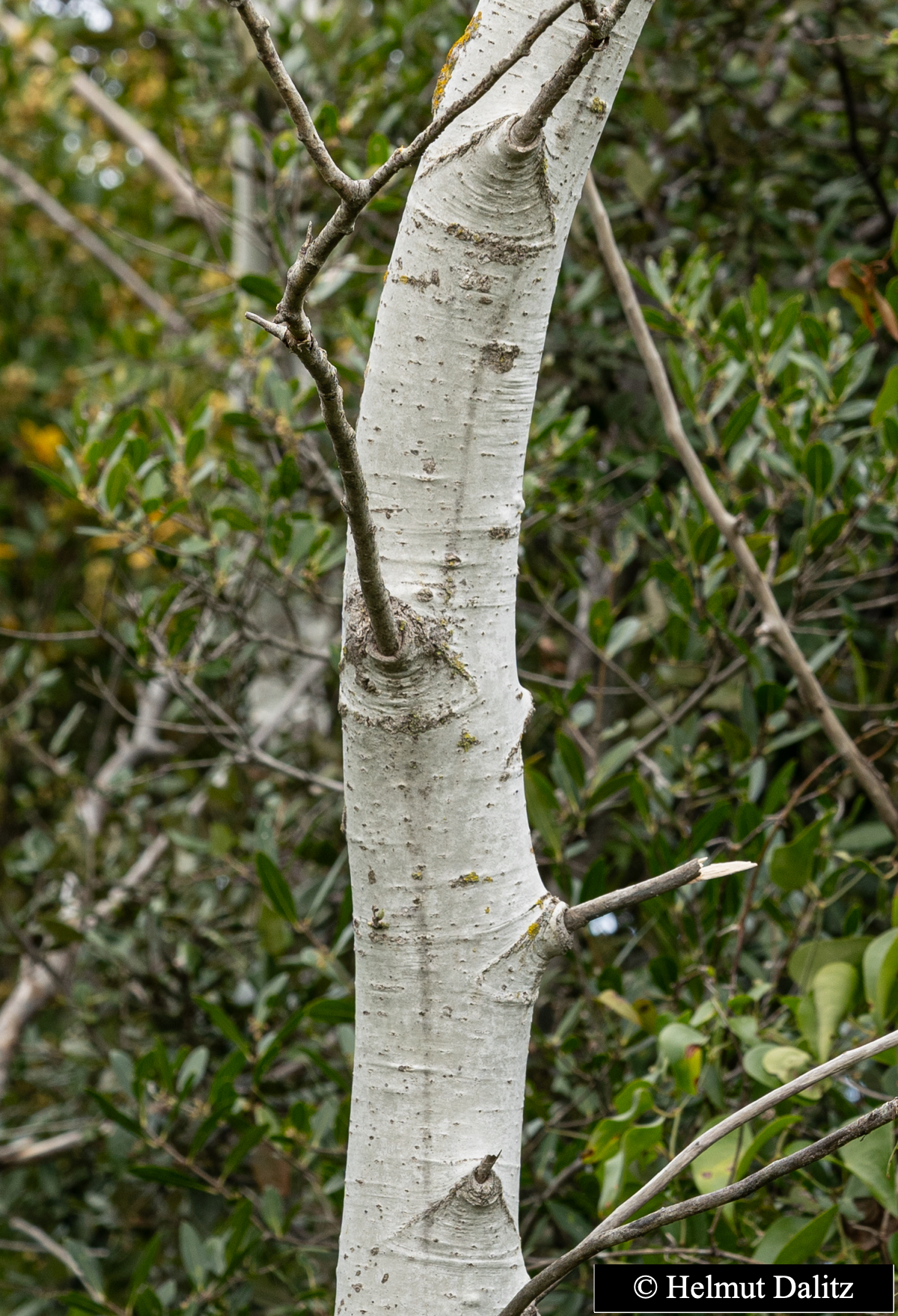
- bark of young trees with small black lenticels
Bundesamt für Naturschutz (BfN) (1999-2001 and ongoing): Floraweb - Daten und Informationen zu Wildpflanzen und zur Vegetation Deutschlands. www.floraweb.de.; Erhardt, W., Götz, E., Bödeker, N. & Seybold, S. (2008): Der große Zander. Enzyklopädie der Pflanzennamen. Band 2. Arten und Sorten. Eugen Ulmer KG, Stuttgart (Hohenheim), 18. Aufl., 2103 S.; Haider, M. et al. (2005): Wildbienenkataster. See: https://www.wildbienen-kataster.de; Jäger, E. J. et al. (2007): Rothmaler - Exkursionsflora von Deutschland. Band 5: Krautige Zier- und Nutzpflanzen. Spektrum Akademischer Verlag, Aufl. 31.10.2007: 880.; Ministerium für Ernährung, Landwirtschaft, Umwelt und Forsten, Baden-Württemberg (Hrsg.) (1985): Pflanzenkatalog zur Verbesserung der Bienenweide und des Artenreichtums (Kurztitel: Bienenweidekatalog); Oberdorfer, E. (2001): Pflanzensoziologische Exkursionsflora. Für Deutschland und angrenzende Gebiete. Eugen Ulmer Verlag, Stuttgart, 8., stark überarb. u. erg. Aufl, 1056 S. 978-3-8001-3131-0.; Pritsch, Günter et al. (1985): Bienenweide.. Neumann-Neudamm, Melsungen; Schick, B. & Spürgin, A. (1997): Die Bienenweide. Eugen Ulmer Verlag, Stuttgart, Auflage: 4., völlig neubearb. u. erw. A., 216 S. 978-3800174188.; The International Plant Names Index (2009). Published on the Internet http://www.ipni.org; Courtesy to IPNI, 2009. Exported from IPNI at date: 2009-09-22 20:17:51; Westrich, P. et al. (2018): Die Wildbienen Deutschlands.. Ulmer Verlag ISBN 978-8186-0123-2.;